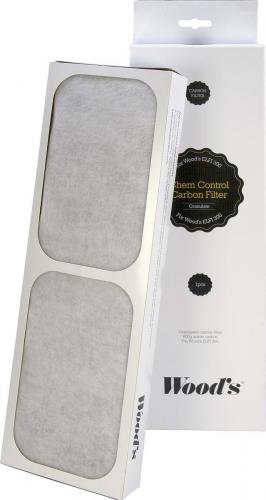
Carbon Filter – Luftreiniger Ersatzfilter – Der Aktivkohle-Filter AL300 AL310 AL311
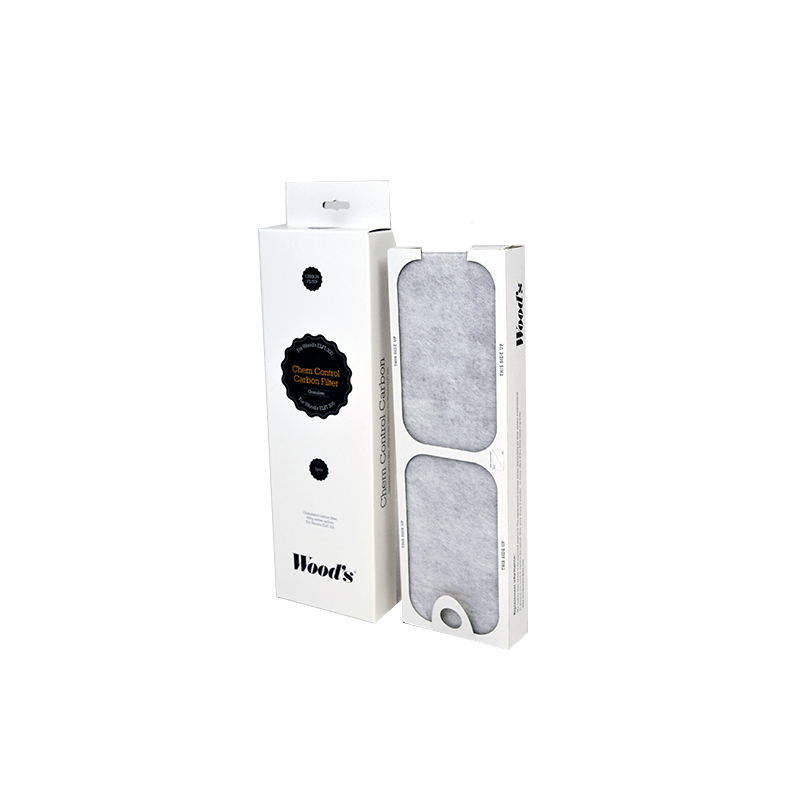
Das Original! – Der Chem Control Carbon Aktivkohlefilter für Luftreiniger Wood Wood´s
Passend für die Modelle Woods Wood´s AL310 AL311 AL311FC AL300 AL311FC
Carbon-Filter mit 130 Gramm Granulatgewicht.
Der Aktivkohle-Filter ist geeignet für die Geräte-Serie Wood´s Wood HEPA Office und Elfi.
Der Chem Control Carbon Filter (Aktivkohlefilter mit Wirkung gegen Gerüche und VOC) stammt aus deutscher! Qualitätsfertigung.
Es wird nur hochwertigstes Qualitäts-Basismaterial verwendet – ohne bedenkliche Inhaltsstoffe billiger Fernostprodukte.
Der Aktivkohlefilter absorbiert Rauch, Gase, Gerüche aus der Raumluft.
Der Carbonfilter hat eine ausgesprochen hohe Dichte an Aktivkohlematerial – und erfüllt deswegen höchste Anforderung an die Filter-Effizienz!
Der Aktivkohlefilter ist in 2 Gewichtsstufen erhältlich. Je schwerer der Filter – desto länger die Filterstandzeit, desto höher die Effizienz.
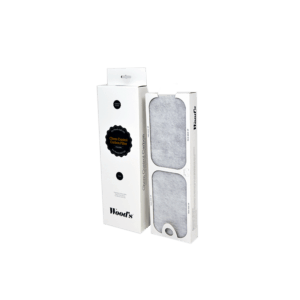
Wie funktioniert ein Aktivkohlefilter – Carbon-Filter?
Die Raumluft wird über das Aktivkohlemedium geführt. Das Aktivkohlematerial zieht wie ein Magnet Gerüche, Gase, VOC, und andere flüchtige Stoffe aus der Luft.
Ein Aktiv-Kohle-Filter besteht großteils aus Kohlenstoff mit einer sehr porösen Struktur. Entweder werden dafür mit Kohlenstoff getränkte Filtermatten verwendet – oder Kassetten, die mit Aktivkohle-Granulaten gefüllt sind.
Diese einzelnen Poren sind dicht miteinander verbunden und weisen durch die spezielle Struktur eine extrem große Filterfläche auf.
In diesen Poren werden Gase und Gerüche „eingebunden“. Aktivkohle besitzt eine große Oberfläche, die gelöste Partikel aus der Luft aufnimmt. Zudem können durch den Kohlestoff Oxidationsprodukte wie Ozon und Chlor aus der Raumluft gefiltert werden. Aktivkohle filtert zudem Reaktionsproduke, die bei der Ionisierung entstehen können.
Wichtig ist deswegen dass der Aktivkohlefilter als endständiger Filter in Luftreinigungsgeräten eingebaut ist – also NACH der Ionisierung / Kaltplasma-Stufe (sofern Geräte mit diesen Techniken arbeiten). Als Ansaugfilter – also vor der Entkeimungsstufe (UV / Ozon / Kaltplasma) kann ein Aktivkohlefilter die Reaktionsprodukte NICHT erfassen!
Die Aufnahmefähigkeit von Aktivkohle ist begrenzt. Je stärker die Luftbelastung – desto kürzer die Standzeit des Filters. Je geringer das Gewicht des Filters – desto geringer die Standzeit. Je dicker der Filter, desto grösser sein Fassungsvermögen.
Deswegen sollte darauf geachtet werden, dass als Aktivkohlefilter sehr oft ein „dünner Luftfilter“ bezeichnet wird…..
„Richtige“ Aktivkohlefilter bestehen meist aus einer Filterkassette, die mit hochwertigem Granulat gefüllt ist – oder aus einem schweren Carbongewebe.
Luftreinigerfilter für aktive HEPA-Luftreiniger sollten mindestens 100 Gramm Gewicht aufweisen – und über mindestens 25 mm Filterstärke verfügen! Optimierte
Granulate Chem Control Carbon Aktivkohle Filter. WCA301P
130 g oder 600g Aktiv Carbon für die Luftreiniger-Modellserie Wood´s Wood AL 300 und 310 und 311 Version Office
Höchste Filtereffizienz
Deutsche Herstellung auf höchstem Qualitätsniveau
Granulat-Dichte für lange Standzeit
Aktivkohlefilter sind auch lieferbar für folgende Modelle: Woods Wood´s GRAN900 / GRAN900 ALOIS
Lieferumfang: 1 Stück.
Gewicht: 130 Gramm
Sie benötigen mehrere Filter? Kontaktieren Sie uns – und profitieren Sie vom Mehrstück-Packagepreis und kostenlosem Versand!
Hier gehts zum Preis des Aktivkohlefilters mit 600 Gramm Granulat für Geräte AL310 AL311 AL311FC
Und hier wirds sehr fachspezifisch…. Luftpartikel die von Wood´s Luftreiniger-Gesamt-Systemfilter erfasst werden
Benzene – Petrol (aviation, engine, commercial) – Petrol (Industrial – of type hexane , – of type heptane, – of type octane) – p-Benzoquinone (quinone) – Benzo(a)pyrene – Benzyl chloride – Biphenyl (diphenyl) – Lead, org. pollutants, tetraethyl lead, tetra – methyl lead – n-Butanol (n-butyl alcohol) – Butanols (butyl alcohols) – Butyl acetate – n-Butyl alcohol (n-butanol) – n-Butyl acrylate 4 – Acetylaldehyde Acetone – Acrolein – Acrylamide – Acrylonitrile –
Allylalcohol – Am-monia NH3 IC – Amylacetate – Aniline – Arsine IC – Butylcellosolve (butyl glycol, glycolmo-nobutyl ether) – n-Butylglycidylether – Butyl glycol (glycolmonobutyl ether, butyl-cellosolve) – Cellosolve (ethyl glycol, glycol monoethyl ether) – Cellosolve acetate (glycol, monoethyl ether acetate) – Cyanides and hydrogen – cyanide IC (as CN) – Cyanogen chloride IC (Cyclohexane, Cyclohexanol, Cyclohexanone) – – Enflurane (Efrane, 2-chloro-1,1, 2-trifluorethyl-diflu-ormethylether) – Epichlorohydrin – Ethanol (ethyl alcohol) – Ether (ethyl ether) – Ethyl acetate – Ethyl acrylate – Ethyl alcohol (ethanol) – Ethyl benzene – Ethyl cyanoa-crylate – Ethylenediamine – Ethylene dichloride – (1,2-dichloroethane) – Ethylene glycol (glycol) – Ethylene glycol dinitrate – (nitro glycol, glycol dinitrate) – Ethylene chlorohydrin (2-chloroethanol) – Ethylene oxide – Ethyl ether (ether) – Ethyl glycol (glycol monoethyl ether, cellosolve) – aliphatic hydrocarbons – Di-(2-ethylhexyl) – phthalate – Diphenyl
(biphenyl) – Diglycidyl ether (DGE) – o-Dichlorobenzene –
p-Dichlorobenzene – 1,2-Dichlorethane (ethylene dichloride) – Nitrous
oxide (laughing gas) N – Dimethylformamide – Dimethyl hydra-sines –
Dinitrobenzene, all isomers – Dioxane – Efrane (Enflurane, 2-chloro-1,1,
2-tri-fluorethyl-difluormethylether) – Ethyl chloride – Phenol – p-Phenylenediamine – Phenyl glycidyl ether – Phenyl isocyanate – Fluoride – Fluorides, incl. hydrogen fluoride (as F) IC Capacity – Hydrogen fluoride – Fluothane (Halothane, 1,1,1-tri-fluor-2-chloro-2-bromoethane) – Formaldehyde – Phosphoric acid, vapour P/IC – Phosphine – (phosphorated hydrogen) P/IC – Phosgene (carbonyl chloride) – Kero-sene (aviation, motor) – Freon 113 (1,1,2-trichloro-1,2,2-trifluoroethane) – Phthalic anhydride – – Chlorine cyanide – (cyanogen chloride) – Chlorine dioxide – 2-Chloroethanol (ethylene chlorohydrin) – Chlorophenols and salts – Ch-loroform – Chloroprene (2-chloro-1, 3-butadiene) – 2-Chloro-1,1,2-trifluorethyldiflu-ormethylether (Efrane, Enflurane) – Hydrogen chloride – Carbon dioxide – Carbon disulphide – Carbon monoxide (carbon oxide) N – Carbon oxide (carbon monoxide) -Carbon tetrachloride – Cresyl glycidyl ether – Mercury, alkyl groups (as Hg) IC – Nitrogen dioxide NO2 – Nitrogen oxide NO N White spirit – Laughing gas – (nitrous oxide) NO, N2O N – Maleic anhydride – Methanol (methyl alcohol) – Methyl acrylate – Furfural – Furfuryl Alcohol – Glutaraldehyde – Glyceryl trinitrate
(nitro-gly-cerine) – Glycol (ethylene glycol) – Glycol dinitrate (nitro
glycol, ethylene glycol di-nitrate) – Glycol monobutyl ether (butyl
glycol, butyl cellosolve) – Glycol monoethyl ether (ethyl glycol,
cellosolve) – Glycol monoethyl ether acetate (cellosolve acetate) –
Glycol monomethyl ether – Halothane (Fluothane,
1,1,1-trifluor-2-chloro-2-bromo-ethane) – Heptane – Hexamethylene –
diisocyanate (HDI) – n-Hexane – Hexane, ex-cept n-hexane – Hydrazine –
Hydroquinone – 2-Hydroxyethyl acrylate – Isophorone – Isophorone
diisocyanate (IPDI) – Isopropanol (isopropyl alcohol) – Isopropyl
alcohol (isopropanol) – Isopropylnitrate – Iodine – Carbonyl chloride
(phosgene) – Quinone (p-benzoquinone) – Chlorine- Methyl alcohol (methanol) – Methyl bromide – Methyl n-butyl ketone – Methyl cello-solve – (glycol monomethyl ether) – Methyl cyanoacrylate – Methylene diphenyl – dii-socyanate (MDI) – Methylene chloride – Methyl ethyl ketone (MEK) – Methyl ketone peroxide – Methyl isobutyl ketone (MIBK) – Methyl iodide – Methyl chloride – Methyl chloroform (1,1,1-trichloroethane) – Methyl methacrylate – Naphtalenes, chlorinated – Naphthalene diisocyanate (NDI) – Nitro benzene – Nitro-glycerine (glyceryl trinitra-te) – Nitro glycol (ethylene glycol dinitrate, glycol dinitrate) – 2-Nitropropane – No-nanes – Octanes – Ozone – PCB (polychlorinated biphenyls) – Pentachlorophenol and salts – Pentanes – Perchloroethylene (tetrachloroethylene) – Petroleum naphtha – Polychlorinated biphenyls (PCB) – n-Propanol (n-propyl alcohol) – n-Propyl alco-hol (n-propanol) – Propylene oxide – Pyridine – Raw cotton (cotton dust) – Nitric acid – Hydrogen selenide – Styrene – Sulphur dioxide IC – Sulphuric acid, vapour – Hydrogen sulphide IC Turpentine – – Trimellitic anhydride (TMA) – Trimethylbenzene, all isomers –
Trimethyl hexamethylene – diisocyanate (TMDI) – Vinyl acetate –
Vinylidene ch-loride – Vinyl chloride – Vinyl toluene – Xylene – Acetic
acid – Acetic anhydride – Tetraethyl lead (as Pb) – Tetrahydrofuran – Te-trachloroethylene (perchloroethylene) – Tetrachlorophenol and salts – Tetra methyl lead (as Pb) – Toluene – Toluene diisocyanate (TDI) – 1,1,1-Trifluor-2-chloro-2-bro-moethane – (Halothane, Fluothane) – 1,1,1-Trichloroethane (methyl chloroform) – Trichloroethylene – Trichlorophenol and salts – 1,1,2-Trichloro-1,2,2-trifluoroe-thane (Freon 113)